

Critical Analysis Of Little Women
Madeleine B. Stern's Brilliant Analysis of Petty Women
Past | On February 16, 2020 | Updated September 2, 2022 | Comments (0)
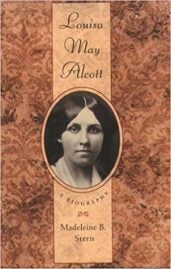
Louisa May Alcott: A Biography past Madeleine B. Stern (1999) is considered the definitive biography of the famous writer of Fiddling Women (1868). Presented here is Stern's brilliant analysis of Little Women.
Tracing the life of Louisa May Alcott (1832 – 1888) the writer, Stern gives penetrating insight non only into Alcott's life, but her very essence equally a writer.
As a writer myself, I accept found much wisdom in these pages and have marveled at Alcott's ability to "simmer a story" in her head while fulfilling duties around the house, and then later sitting down to spill it out on paper to submit without editing.
Stern'southward chapter on the cosmos and writing of Piddling Women analyzes the creation of the book, how Alcott wove fact and fiction together, and why the book has such universal appeal, transcending non only gender and age, but time.
. . . . . . . . . .
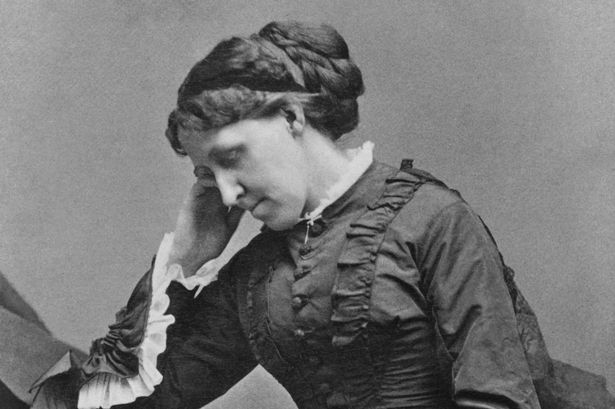
Learn more about Louisa May Alcott
. . . . . . . . . .
A request for Louisa May Alcott from a publisher
Stern begins with Thomas Niles of Roberts Bros. urging Louisa to endeavor her hand at a girl'southward book, hoping to duplicate the delinquent success of the "Oliver Optic" series for boys. Impressed by the success of Infirmary Sketches, Alcott'south get-go foray into realism, Niles hoped to capitalize on that style and the author'southward recent success for the juvenile marketplace.
I had always wondered why he approached Louisa every bit she didn't have any straight experience in writing for juveniles and Stern reveals why: "She [Louisa] have proved her ability to report observations in Hospital Sketches; she had indicated her powers of appealing to juvenile readers in her editorship of Merry's Museum.
Could not Miss Alcott combine both talents in a domestic novel that would reflect American life for the enjoyment of American youth?
How she wrote for children
Louisa saw no trick in writing for children: simply tell the truth. Draw life equally it is, using the real language of children (slang and all). For Louisa, it was a simple calculation. Wisely deciding to write what she knew, she drew upon the rich history of her own childhood.
Stern describes Bronson's ideal of the "happy, kind and loving family, a home where peace and gentle quiet abide." Little Women was to be the depiction of that ideal dwelling.
Although the Alcott home life was oftentimes fraught with anxiety and chaos due to their poverty, in that location was plenty to build upon in Picayune Women based upon the platonic that they attempted to alive. On occasion, that ideal did play out.
Carrying on the family piece of work
Bronson and Ralph Waldo Emerson believed in Louisa'south ability to relate to children; Waldo had called her the "poet of children, who knew their angels" (Ibid). Certainly Bronson had something to gain by Louisa's agreeing to write the story as Robert Bros. promised to publish his volume, Tablets, if she agreed.
But he had urged her for years to write good stories for children as the nurturing of the minds of children was nearest and beloved to his heart. If he could no longer do information technology, his daughter could take up the pall through her gift with a story.
Stern writes, "The door was Hillside's. Could Louisa open it, recover those despised recollections of childhood, and find in the biography of one foolish person the miniature paraphrase of the hundred volumes of the universal history?"
. . . . . . . . . . .
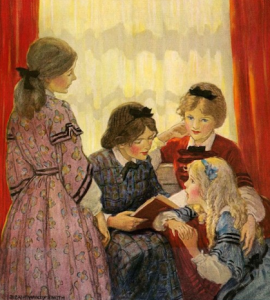
Little Women: A Book I Come Dorsum to for Comfort and Guidance
. . . . . . . . . . .
Mixing fiction seamlessly with fact
Mining her vast storehouse of memories, Louisa transcribed her babyhood, mixing fiction seamlessly with fact to create a compelling story. Both she and Thomas Niles, her publisher, felt the book was "dull" later the first twelve chapters, simply Niles' niece and other children who read the manuscript had unlike ideas.
Louisa may not have enjoyed the creative satisfaction of churning out Little Women every bit she had with her A. M. Barnard thrillers, but her pen was creating sheer lightning in the guise of simple truth and family devotion.
Characters and settings from the book were composites of existent people and events. Stern writes of Laurie: "Laurie would inherit from Ladislas [Wisniewski, Louisa's love interest from her first tour of Europe] his curly black hair and big black eyes, his musical skill, and his foreign background, while Alf [Whitman, a lifelong friend from Louisa'south theater days] would endow him with high spirits and a sober kind of fascination."
Mr. March's letters came from Bronson's writings while living at "Concordia" (simply before they embarked on Fruitlands) while Marmee's notes to her daughters originated from jottings in the girls' diverse journals.
Louisa's "The Olive Leaf," a family paper created while the family lived in destitution in Boston as a means of entertainment, became "The Pickwick Portfolio," carrying with information technology the various Dickensian characters.
What was real and what was fiction? Did Amy (May) really burn Jo's (Louisa's) manuscript? Did she really autumn through the ice? Did Anna have the feel of Meg, being dressed up like a doll past her wealthy friends?
Stern writes, "Information technology scarcely mattered. Fact was embedded into fiction, and a domestic noel begun in which the local and the universal were married, in which adolescents were clothed in mankind and blood."
. . . . . . . . . .

. . . . . . . . . .
Creation of an American classic
Little did Louisa know that this story based her own family life and their "queer" adventures would become the story that was on the heart of all Americans.
It was time America had its own literature, its own family unit. The March family was quintessential New England and however their story transcended New England, having, as Madeleine Stern put it, "a more universal reality than that of a single village."
For the kickoff fourth dimension teenage readers met themselves: adolescent characters navigating through the daily trials and triumphs, emerging into machismo. Million begins her ain family with John. Jo strikes out on her own as a working adult female and writer, living far away from home New York City.
Amy evolves into a woman of grace, leaving behind selfish impulses and somewhen leading Laurie to his better self. Beth was not destined to enter the earth of adults merely left behind an instance and a spirit that guided her sister Jo to a place where she could reconcile her ambitions with her love of family.
Stern writes, "And then the families of the nation might open the door of Hillside to detect not the Marches, but themselves waiting inside. Under to roof of ane New England habitation, they would see all the homes of America."
To marry or not to ally …
Role two of Little Women, dubbed Good Wives, was written non at Orchard House but in Boston on Brookline Street. The demands of readers were corking; such was the cost of success, a success she had dreamt of since existence a teenager herself.
Yes, the girls would marry even though she wished that Jo could have remained like herself, a "literary spinster." It was not from lack of suitors. George Bartlett, a fellow thespian in the local theatricals, offered his help in reading the proofs of the kickoff part of the volume and his help was gratefully accepted. His attentions upon the "chronic one-time maid," however were politely rebuffed.
Monies earned, stories told
Moving with May into the new Bellevue Hotel on Beacon Street, Louisa continue work on the second half of the book while receiving her first royalties totally 3 hundred dollars for three g copies sold.
Hither she relived the pain of Lizzie'south decease, brought Amy and Laurie together in a boat they would pull together and had Professor Bhaer serenade Jo with the vocal Louisa herself had sung for Mr. Emerson.
A timely restorative to the Alcott family
Stern writes, "Devoutly Louisa hoped that the new year's day of 1869 would bring to the Orchard House a happy harvesting from the tears and laughter she had sowed in the book where she had found her style at final."
It would come up to pass with a harvest pressed down, shaken together, and running over, as it says in the scriptures. "The long-standing hurts were healed, the reception of the March family unit into the hearts of New England proved a timely restorative to 1 who had created that family."
— Contributed by Susan Bailey, a author and lifelong student of Louisa May Alcott. She maintains the only weblog devoted exclusively to Alcott,Louisa May Alcott is My Passion.
Categories: Literary Analyses, Literary Musings

Critical Analysis Of Little Women,
Source: https://www.literaryladiesguide.com/literary-musings/madeleine-b-sterns-brilliant-analysis-little-women/
Posted by: stringerbearring.blogspot.com
0 Response to "Critical Analysis Of Little Women"
Post a Comment